

Introduction
A calm evening does not have to begin with a full schedule change. Often, it starts with a few deliberate cues: softer light, a cleaner surface, a slower breath, and a scent that tells the body the workday is over.
Aromatherapy works best as part of a wider home wellness ritual. The scent is not a shortcut or a cure-all. It is a sensory anchor—a way to make your space feel more intentional, grounded, and ready for rest. For busy professionals, parents, hosts, and anyone moving between office mode and home life, that small transition can make the evening feel less rushed.
This guide shares a simple, premium approach to building an evening aromatherapy ritual at home. It is practical, easy to repeat, and designed for modern routines where calm needs to be realistic, not complicated.

Why an Evening Scent Ritual Feels So Effective
Scent is closely tied to memory, mood, and atmosphere. A familiar aroma can quickly make a room feel warmer, cleaner, or more settled. When paired with repeated habits—turning down lights, tidying one area, stretching gently, or taking a quiet shower—it becomes a signal that the day is changing pace.
The key is consistency. A single diffuser session may smell pleasant, but a repeated ritual creates association. Over time, the same scent used at the same point in the evening can help define a personal boundary between productivity and recovery.
For Palmeo Wellness, aromatherapy is best understood as a lifestyle layer: elegant, subtle, and supportive of relaxation. It should complement healthy routines such as hydration, movement, sleep hygiene, and mindful rest.
Choose a Calm Scent Profile, Not a Strong One
A premium aromatherapy ritual should feel balanced, never overpowering. The goal is to create an atmosphere you can breathe easily in for 20 to 60 minutes.
For evening use, consider soft scent families:
- Use a small amount of scent at first; a subtle aroma feels more elegant and is easier to live with.
- Keep your evening scent separate from your daytime scent so your mind associates it with unwinding.
- Refresh the room with air before diffusing, especially in bedrooms or compact spaces.
- Pair aromatherapy with one habit only, such as stretching, journaling, tea, or a warm shower.
- Stop diffusing before sleep unless the product is specifically designed and safely used for longer periods.
- Store oils away from heat, direct sunlight, and children.
- If a scent feels irritating, distracting, or too strong, discontinue use and choose a gentler option.
- Repeat the ritual at the same time of day when possible to make it feel familiar.
- Keep work devices out of the ritual area to protect the calm atmosphere.
- Choose clean, uncluttered surfaces so the scent supports a room that already feels visually peaceful.
A Simple Weekly Scent Plan
If you like variety, create a light weekly rotation rather than changing scents every night. This keeps the ritual fresh without making it complicated.
Use lavender and cedarwood on high-demand workdays when you want the room to feel grounded. Choose bergamot and frankincense when you want a brighter, spa-like atmosphere after hosting, errands, or travel. Keep one unscented evening each week to let the room reset naturally.
The best plan is the one you will actually repeat. A beautiful ritual should feel like support, not another standard to meet.
Conclusion
An evening aromatherapy ritual is a simple way to bring more calm into the home without overhauling your routine. When scent is paired with softer light, cleaner surfaces, gentle body recovery, and a clear end to the workday, it becomes more than fragrance. It becomes a daily cue for presence.
Start small: one scent, one room, one 20-minute window. Let the ritual stay quiet and easy. With repetition, your home can begin to feel like a place that welcomes you back to yourself at the end of a busy day.
This article is for general wellness and lifestyle information only and is not medical advice.
- Lavender for a classic, floral calm
- Chamomile for a gentle herbal impression
- Bergamot for a light citrus note that still feels refined
- Cedarwood for warmth and grounding
- Frankincense for a quiet, spa-like mood
- Ylang-ylang in very small amounts for a soft floral accent
If you blend oils, keep it simple. Two notes are usually enough. For example, lavender with cedarwood feels clean and restful, while bergamot with frankincense feels bright but composed. Avoid mixing too many scents, especially at night, because the room can become heavy rather than serene.
Always follow product instructions, dilute where required, and avoid using essential oils around pets, babies, or sensitive household members unless the product is clearly appropriate for that environment.
Set the Room Before You Set the Scent
Aromatherapy feels more luxurious when the room is prepared first. This does not require deep cleaning. A five-minute room reset is enough.
Start with one visible surface: a bedside table, coffee table, desk, or bathroom counter. Clear cups, receipts, laundry, or work items. Then adjust the lighting. Choose warm lamps, indirect light, or a small candle-style glow if safe and appropriate. The room should feel softer before the scent begins.
Next, check the air. If the room feels stale, open a window briefly or use a fan to refresh it before diffusing. Scent layered over poor air quality can feel dense. Clean air, then aroma, creates a much more refined environment.
This small sequence—surface, light, air—makes the scent feel intentional instead of random.
Build a 20-Minute Evening Aromatherapy Ritual
A ritual is easier to repeat when it has a clear beginning and end. Twenty minutes is a practical length: long enough to reset the mood, short enough to fit into a busy evening.
Begin by starting your diffuser or placing your chosen room-safe aroma source according to its instructions. Keep the amount modest. Then put your phone on silent or away from the main seating area.
For the first five minutes, do a slow transition task. Change into comfortable clothes, wash your face, prepare tea, or put away your work bag. This helps your mind stop treating the evening as an extension of the office.
For the next ten minutes, choose one low-effort recovery habit. You might stretch your neck and shoulders, sit quietly with your feet supported, journal three lines, or enjoy an unhurried shower. Keep it simple. The aroma should support the experience, not become another task to manage.
For the final five minutes, reduce stimulation. Lower the music, dim the lights further, and decide what is no longer needed tonight. Closing a laptop, placing your bag by the door, or setting out tomorrow’s outfit can create a sense of completion.
Pair Aromatherapy With Gentle Body Recovery
Scent and body recovery work beautifully together because both invite a slower pace. After long desk hours, travel, errands, or standing work, the body often needs clear signals that it can soften.
Try a simple seated reset: sit tall, let your feet rest flat, and slowly roll your shoulders back five times. Then place one hand on the upper chest and one hand on the abdomen. Breathe naturally for one minute without forcing depth. Notice the aroma in the room as part of the exhale.
You can also use aromatherapy before or after a home massage, foot soak, warm shower, or gentle stretching routine. The scent frames the experience, making it feel more complete and more spa-like without needing an elaborate setup.
Avoid strong stretching, intense workouts, or stimulating tasks during this window if your goal is evening calm. Keep the ritual restorative.
Make It Feel Premium With Small Details
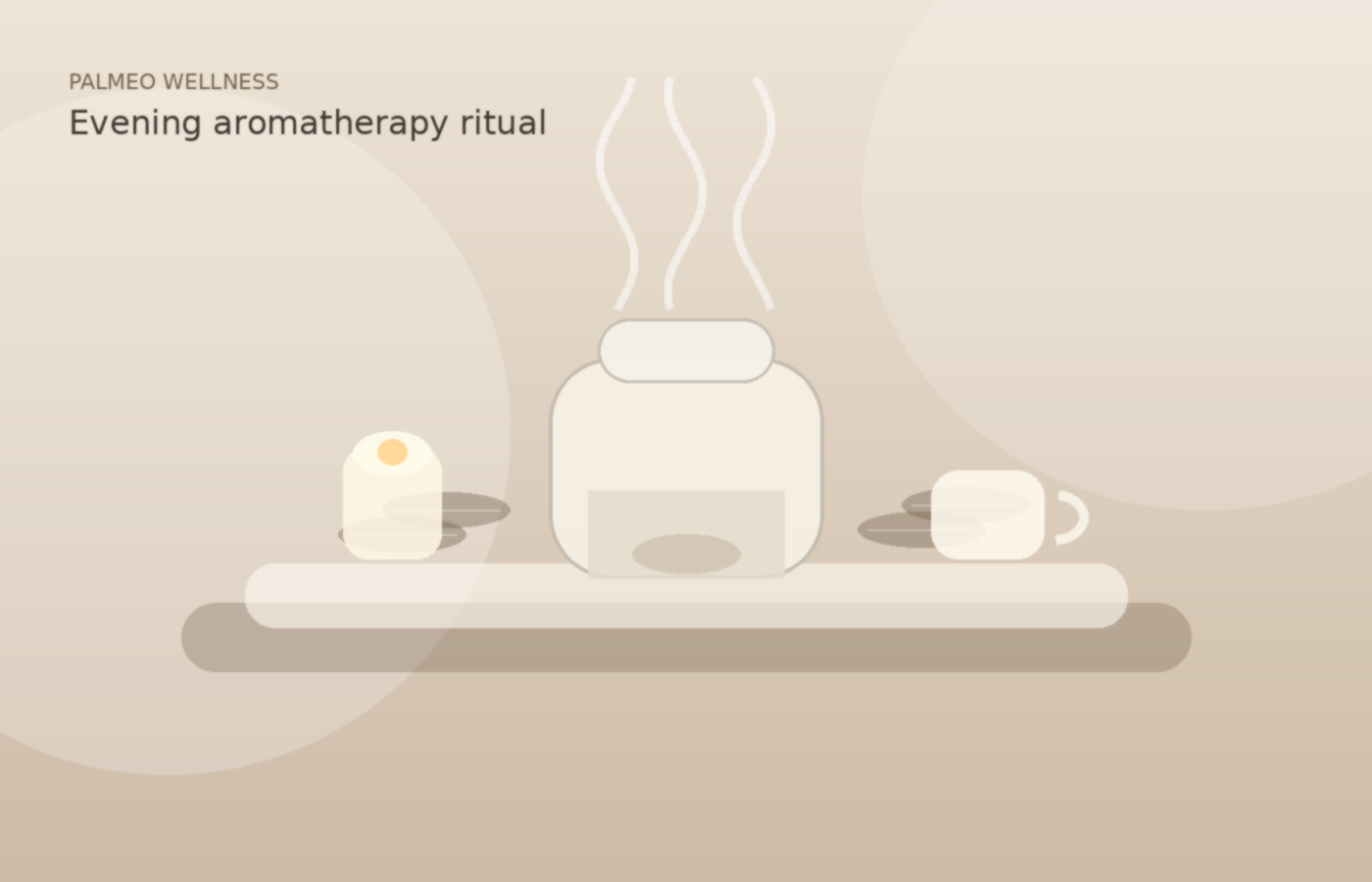
Luxury at home is often about restraint. A calm tray with a diffuser, a folded hand towel, a glass of water, and a small bowl for jewelry or keys can make the ritual feel considered. Choose fewer items, better placed.
Sound also matters. Soft instrumental music, quiet nature audio, or silence can work well. Avoid loud playlists or content that pulls your attention back into problem-solving. If you enjoy tea, choose a caffeine-free option and prepare it before sitting down so the ritual flows without interruption.
Texture can complete the mood. A light blanket, clean robe, soft socks, or a supportive pillow tells the body that the evening is no longer about performance. None of these details are complicated, but together they create a polished wellness experience.
Practical Tips
- Use a small amount of scent at first; a subtle aroma feels more elegant and is easier to live with.
- Keep your evening scent separate from your daytime scent so your mind associates it with unwinding.
- Refresh the room with air before diffusing, especially in bedrooms or compact spaces.
- Pair aromatherapy with one habit only, such as stretching, journaling, tea, or a warm shower.
- Stop diffusing before sleep unless the product is specifically designed and safely used for longer periods.
- Store oils away from heat, direct sunlight, and children.
- If a scent feels irritating, distracting, or too strong, discontinue use and choose a gentler option.
- Repeat the ritual at the same time of day when possible to make it feel familiar.
- Keep work devices out of the ritual area to protect the calm atmosphere.
- Choose clean, uncluttered surfaces so the scent supports a room that already feels visually peaceful.
A Simple Weekly Scent Plan
If you like variety, create a light weekly rotation rather than changing scents every night. This keeps the ritual fresh without making it complicated.
Use lavender and cedarwood on high-demand workdays when you want the room to feel grounded. Choose bergamot and frankincense when you want a brighter, spa-like atmosphere after hosting, errands, or travel. Keep one unscented evening each week to let the room reset naturally.
The best plan is the one you will actually repeat. A beautiful ritual should feel like support, not another standard to meet.
Conclusion
An evening aromatherapy ritual is a simple way to bring more calm into the home without overhauling your routine. When scent is paired with softer light, cleaner surfaces, gentle body recovery, and a clear end to the workday, it becomes more than fragrance. It becomes a daily cue for presence.
Start small: one scent, one room, one 20-minute window. Let the ritual stay quiet and easy. With repetition, your home can begin to feel like a place that welcomes you back to yourself at the end of a busy day.
This article is for general wellness and lifestyle information only and is not medical advice.