

Wellness education
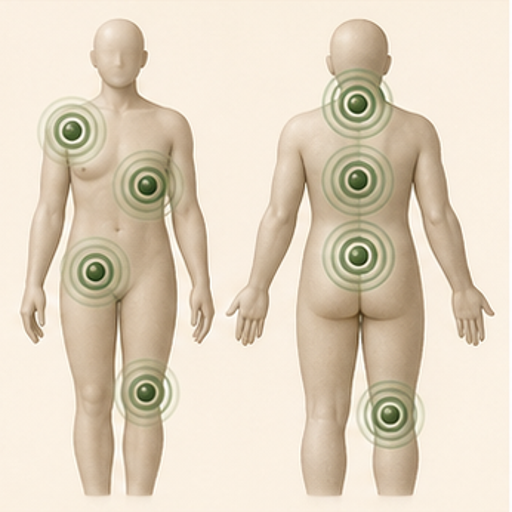
Pain can show up in different ways: sharp, dull, tight, burning, or heavy. Understanding the type of discomfort you feel can help you decide whether to rest, adjust your routine, seek medical advice, or use massage as supportive care.
Pain patterns to notice
- Location and intensity
- Sharp, dull, or tight sensation
- When to rest or seek care


Common types of pain and tension
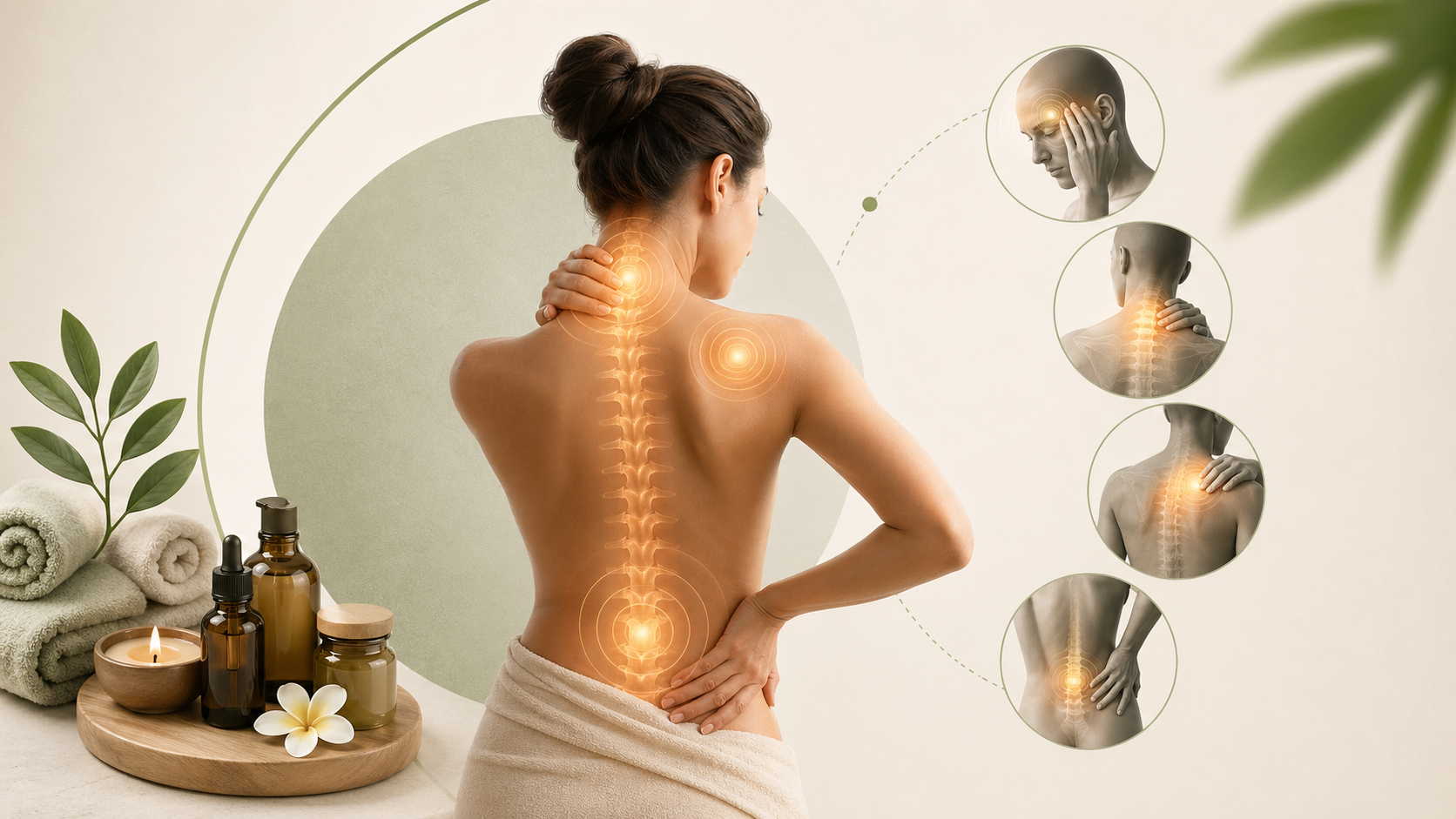
Headache-related tension
Headaches may be connected to stress, posture, eye strain, dehydration, or neck and shoulder tightness. Massage may help when muscle tension is part of the trigger.
Back discomfort
Back pain can come from long sitting, overuse, poor sleep position, or physical strain. Gentle massage may support comfort, but persistent or severe pain should be assessed by a healthcare professional.
Neck and shoulder tightness
This is common for people who work at a desk, drive frequently, or carry stress in the upper body.
Muscle soreness
Exercise, travel, and physically demanding routines can leave muscles sore. Massage may help reduce the feeling of heaviness and stiffness.
When to avoid massage and seek medical advice
Do not use massage as a substitute for medical care if pain is severe, sudden, unexplained, linked to injury, accompanied by numbness or weakness, or does not improve. In those cases, consult a qualified healthcare provider first.
For general body tension and relaxation support, you may contact Palmeo Spa through our Contact Us page.

Listen before pushing through
Understanding how discomfort shows up helps you choose the right kind of rest, massage pressure, or professional care.
Ready to plan your massage?
Send Palmeo Spa your preferred date, time, location, massage service, and number of guests so the team can guide you on the next step.