
A calm, premium evening reset for Metro Manila customers who arrive home wired, heavy, and too tired to sleep—using simple room prep, breathing, hydration, and home massage support.
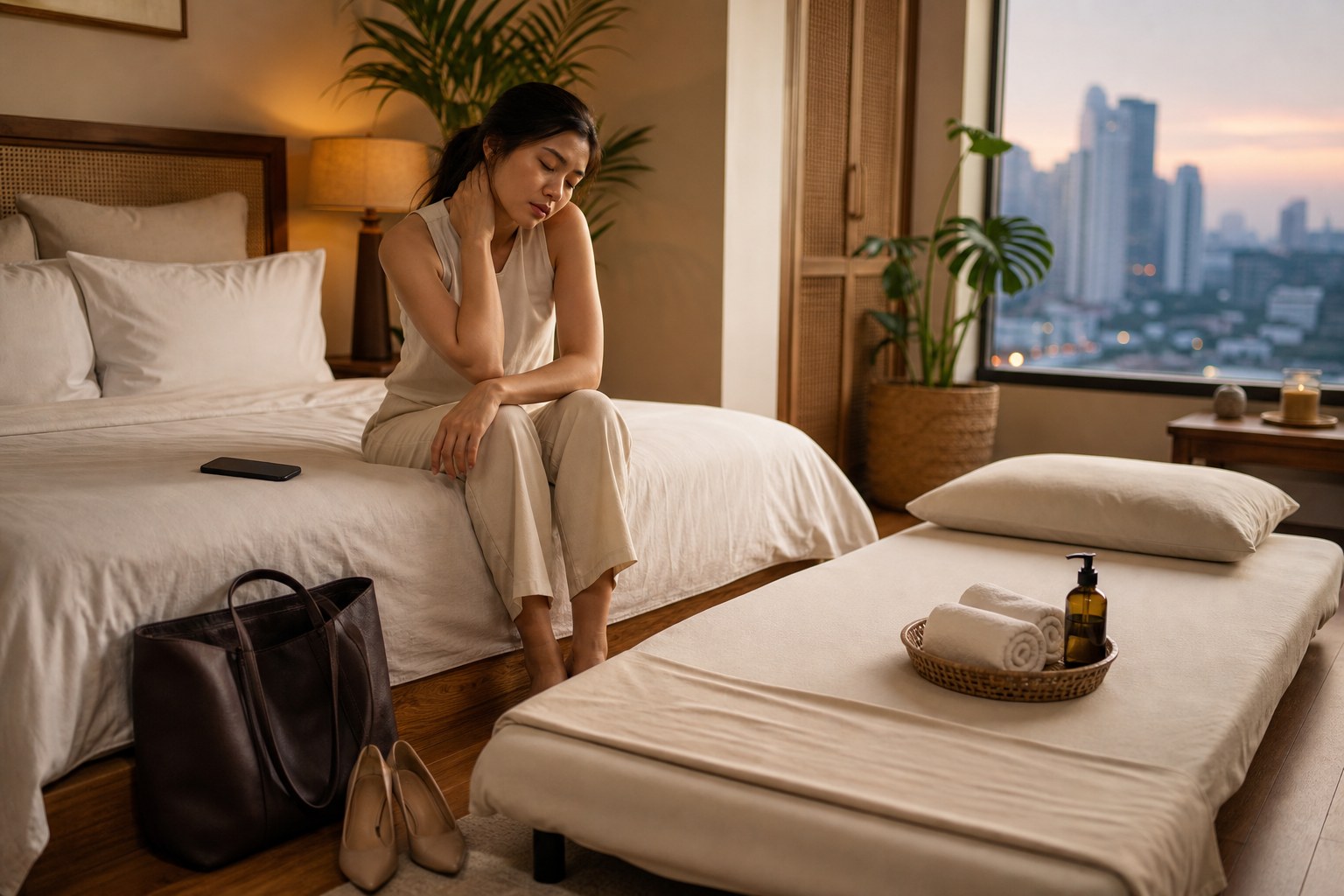
When your body is tired but your mind stays awake
Some Metro Manila nights have a particular kind of heaviness. You finally reach your condo, apartment, or hotel room after traffic, errands, long screen hours, and the usual city noise. Your shoulders feel raised. Your lower back feels compressed. Your feet are ready to stop. Yet when you get into bed, sleep does not arrive as quickly as you expected.
This is the uncomfortable gap many busy customers recognize: physically tired, mentally switched on. It is not a diagnosis, and it does not need a dramatic solution. Often, the better approach is a calm sequence that tells the body the workday is truly finished. A home massage can become the centerpiece of that wind-down because it comes to your space, removes the need to travel again, and gives your evening a clear point of transition.
Why Manila evenings can feel so overstimulating
The city asks your senses to stay alert. Commuting through EDSA or C5, sitting in a ride-hailing car, walking through a mall, managing family needs, checking messages, or finishing one more task can keep the nervous system in “go mode” long after the day is technically done. Air-conditioning, humidity outside, bright screens, and late meals can add to the feeling of being unsettled.
For many home massage customers, the goal is not only comfort during the session. It is the before-and-after: softening the neck, releasing the jaw, letting the back rest, quieting the room, and making bedtime feel less abrupt. A premium home service works best when your space supports that shift.
Start with a 15-minute room reset
Before your therapist arrives, give the room a small but intentional reset. You do not need a perfect spa suite. A clean corner beside the bed, a massage mat or table area, and a clear walkway are enough. Place laundry, laptop bags, and work items out of sight if possible. Set your phone to silent and put it face down where you will not keep checking it.
Lighting matters. Use warm lamps instead of bright ceiling lights. If you are in a condo or hotel room with a city view, close the curtains halfway to soften the visual stimulation while still keeping the space elegant. Add a glass of water nearby. The goal is to make the room feel less like the end of a hectic day and more like a private recovery space.
Quick setup idea: dim the lights, silence notifications, clear one comfortable area, and let the room feel ready before your therapist arrives.
Choose pressure that helps you settle, not stay alert
When you are overtired, stronger is not always better. Deep pressure can feel satisfying, but if it makes you brace, hold your breath, or mentally monitor every movement, it may keep you more alert than relaxed. Tell your therapist that you want an evening wind-down rather than an intense recovery session.
Areas that often need gentle attention after city days include the upper shoulders, base of the neck, lower back, calves, and feet. Slow, steady work can help you notice where you have been carrying tension without turning the massage into a performance test. You should be able to breathe normally, unclench your jaw, and feel your body become heavier against the mat or table.
Pair the massage with simple breathing
A useful home ritual is to match the first few minutes of the massage with quiet breathing. Try inhaling through the nose for four counts and exhaling slowly for six. Do this without forcing it. The longer exhale is a gentle cue that the day is slowing down.
If your mind keeps replaying messages, meetings, or tomorrow’s schedule, do not fight every thought. Instead, return attention to simple physical details: the warmth of the room, the towel under your hands, the feeling of your shoulders dropping, or the rhythm of the therapist’s movements. This keeps the ritual grounded and practical.
Hydration without disrupting rest
Metro Manila days can be dehydrating, especially when you move between humid streets, air-conditioned buildings, coffee, salty meals, and long periods of sitting. After a massage, sip water slowly rather than drinking a large amount all at once. You want to feel refreshed, not uncomfortably full right before bed.
If you enjoy tea, choose something caffeine-free and light. Keep the routine simple. The premium feeling comes from ease: a clean glass, a quiet table, and no rushing back into chores or screens.
Make the hour after massage screen-light and decision-light
The massage itself is only part of the wind-down. The hour after matters. Avoid opening work chats “just to check.” Avoid starting a new show that will pull you into another episode. If you need your phone for an alarm, set it before the session and leave it away from the bed afterward.
Choose low-effort activities: a warm shower, soft music, a few pages of an easy book, or simply lying down while the room remains calm. If you are booking for a couple, family member, or staycation companion, agree ahead of time that the evening will stay quiet after the service. This protects the relaxed state you just created.
A calm way to end the day at home
Home massage is most valuable when it fits real life. It can support the customer who comes home from BGC with tight shoulders, the parent who finally has quiet after the household settles, the traveler resting in a Manila hotel room, or the couple planning a slow staycation night. The service meets you where you are, so your final errand of the day is not another trip across the city.
If you often feel too tired to sleep, consider building a gentle evening reset around your next booking: prepare the room, choose calming pressure, hydrate lightly, and keep the post-massage hour quiet. Small choices can make your home feel less like the place where stress lands and more like the place where the day can finally release.